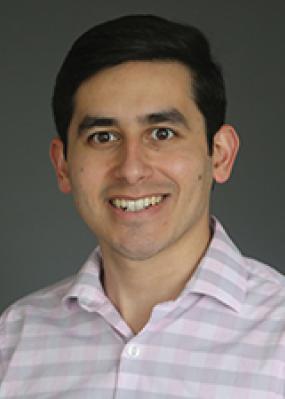
Longtime project coordinator makes conservation research possible

Jim Lovett | Research Project Coordinator | Monarch Watch
Protecting a threatened species requires understanding its current population. As research project coordinator for Monarch Watch, Jim Lovett helps foster this understanding for one of the most well-known and beloved butterfly species in North America.
Founded at the University of Kansas in 1992, Monarch Watch advances international education, conservation and research on the monarch butterfly, its habitat and its spectacular fall migration. Lovett joined the team in 1995 after earning a bachelor’s in biology from KU.
“While each team member takes the lead on different projects, Jim knows the inner workings of all of our projects,” said Kristen Baum, director of Monarch Watch, senior scientist at the Kansas Biological Survey & Center for Ecological Research, and professor of ecology & evolutionary biology.
As documented in a recent 60 Minutes segment, one of the central activities of Monarch Watch is its butterfly tagging project, which recruits scientists and volunteers to catch monarch butterflies and place tags on their wings to help document their annual migration from Canada to Mexico. More than 2 million monarchs have been tagged by scientists over the course of more than 30 years. Lovett compiles and verifies this data in the program’s scientific database. He also provides technical and other support for a host of essential activities through financial reporting, fundraising, marketing, and communication with the public and media outlets.
“Although these tasks are very different, Jim takes a similar approach to addressing each of them, which involves strong organizational and problem-solving skills, as well as attention to detail and extensive technical expertise in a wide range of areas,” Baum said.
Lovett is currently helping organize the International Monarch Science Symposium, which will bring together scientists from around the world to discuss current research. As the leading technology and data staff member, he will help record and retain symposium information, including presentations from more than 45 scientists.
“Jim always goes the extra mile to help people,” Baum said, “whether it is a team member or someone who reaches out about one of our programs.”