KU postdoc preserves history of the natural world before it disappears

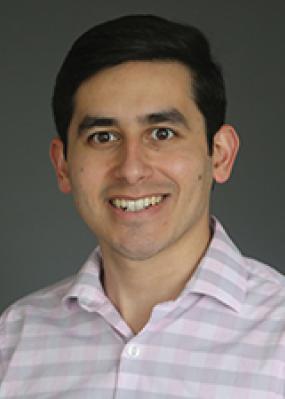
Samanta Orellana | Postdoctoral Researcher | KU Biodiversity Institute & Natural History Museum
Like many scientists, Samanta Orellana’s interest in the natural world began in childhood.
“I’m originally from Guatemala, so I grew up going out to a lot of forests and natural areas, and I got interested in insects at a very young age,” she said.
Orellana earned a bachelor’s degree in biology from the University of San Carlos in Guatemala and a master’s degree in entomology from the University of Panama. She was recruited to a doctorate program by Nico Franz, director of the KU Biodiversity Institute & Natural History Museum.
“When I was in Panama, I got an offer to join Nico’s lab at Arizona State University, where he was before joining KU,” Orellana said.
Now a postdoctoral researcher in KU’s Biodiversity Institute, Orellana helps make insect specimens from the museum available to researchers around the world by digitizing high-quality microscopic photos in Specify, and also publishing them to open-access databases like Symbiota. Researchers from Japan, New Zealand, the Czech Republic, Costa Rica and elsewhere have used data or images Orellana shared. While documenting these samples — some of which are decades old — Orellana has identified species of fungus weevils that had not yet been discovered.
“A lot of insects have some uses that humans can relate to, like bees,” she said. “A lot of people study bees because they are important pollinators, but this family of weevils is barely being studied at all.”
“When I started studying them, for example, the last catalog for Central America was published in 1906. So after more than 100 years, I was the first person who published something about fauna in the region.”
Orellana also contributes to the museum’s collections. In July, she traveled to Costa Rica to collect insect samples. Colleagues from local universities helped identify target areas and sort specimens for different research purposes. Orellana and colleagues are now waiting for export permits to bring the insects to KU.
Some weevils are too small to be viewed in detail without the help of microscopes. Even then, some must be dissected to reveal the anatomical features that distinguish one species from the next. Central American weevils have been understudied historically because they don’t serve an obvious human purpose and are not charismatic species, like polar bears or elephants. The KU collections may have the only sample of a particular insect obtained by researchers in recorded history. Orellana balances the need to preserve specimens with the value of understanding the complex web of life.
“If I dissect this specimen and break it, I will feel very guilty,” she said. “But if I don’t do it, no one else will. I learned that when I was a student.”
“If I don’t do it now, maybe no one will check this collection in 50 years. The only country that has a full catalog of its fungus weevil fauna is New Zealand to this date.”
As deforestation and climate change threaten unique ecosystems in Central America and elsewhere, this work has taken on a new sense of urgency. Identifying new species can make the case for preserving the location where that specimen was collected.
“Sometimes it’s kind of sad because for some of the older specimens, the forests they inhabit no longer exist, so we are late to preserve those areas,” Orellana said. “But at least we have some evidence that species existed at some point. Sometimes, what you find in collections, that’s it. We have lost that biodiversity forever.”
“If we know more about the distribution of species — and we know they are rare, if they are endemic — maybe we can contribute to pushing a little bit to preserve that particular region.”