KU postdoc maps genomes to understand the nervous system

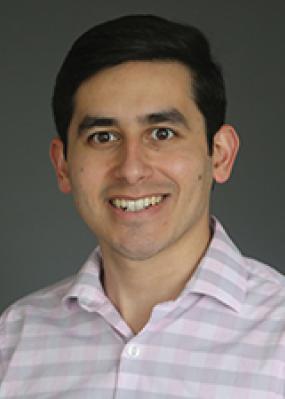
Felipe Teixeira | Postdoctoral Researcher | Center for Genomics/Lundquist Lab
An organism’s DNA acts as a set of instructions that tells cells how to grow and what to do. Felipe Teixeira uses genetics, biochemistry, and computation to figure out which genes are responsible for development of neurological cells in small animals, which could help us better understand similar genes in humans.
Teixeira studied microbial genetics at the Federal University of Rio de Janeiro in Brazil. After completing his education, he served as a postdoctoral researcher at the Fluminense Federal University, where he studied microbes isolated from chronic wounds. But Teixeira also wanted to work with genetics in multicellular organisms, so he applied to a postdoctoral position within the KU Center for Genomics. Now in the lab of Erik Lundquist, professor of molecular biosciences, Teixeira studies how neurons are formed in microscopic worms known as Caenorhabditis elegans.
“I try to understand the development of the nervous system,” Teixeira said. “Basically, there are stem-like cells that will form neurons, and I try to follow the path that they take from this undifferentiated cell to the differentiated neuron and see what's going on at the gene level, what genes are being expressed. I do that using a technique called single-cell RNA sequencing.”
To understand which genes are responsible for neurons as opposed to other cells, Teixeira takes a solution of cells extracted from the worms and sends them to the KU Flow Cytometry Core Lab. There, they are funneled through an opening narrow enough to allow only a single cell to pass through at a time. Specialized sensors around the opening detect the different shapes of each cell and sort the cells by type into separate containers at the other end of the machine. These newly separated solutions are then sent to the KU Genome Sequencing Core Lab, where the cell’s genetic material is collected and sequenced.
With the data generated from the sequencing, Teixeira and his colleagues can compare neuron cells to other cells. Every cell contains the same DNA, but each cell type only uses a portion of the DNA’s instructions to function. With the help of the KU Genomic Data Science Core and advanced software, Teixeira can physically map which genes are being used by which cells.
“Most of my research in the past months has been computational, just trying to analyze the data. That's basically the workflow: Get the cells from the worms, select the ones I want, run RNA sequencing to detect all the genes that are being expressed on those cells, and then use the computer to look at what is being switched on and off in each of the cells,” Teixeira said. “With that, I can create maps that show the trajectory of the cells during development.”
While Teixeira is not studying human cells or specific diseases, genes and genetic mechanisms are conserved from worms to humans. His efforts to map which genes are used in neurons can help other researchers look for similar genes in different species. Researchers disseminate these findings in peer-reviewed publications, as well as at conferences and workshops, such as the annual KU Center for Genomics Symposium , which Teixeira helps plan. These forums provide researchers opportunities to learn about other scholarship, which can give them a more holistic understanding of life sciences that sparks further inquiry.
“If I'm looking at the genetics of the nervous system, someone is looking at some microbiological aspect, and another person is doing biochemistry — it's all the same. Everything comes together, and we learn how to integrate that,” Teixeira said. “These broad events are helpful to know what's going on out of your bubble and try to use that different knowledge to improve your own research.”