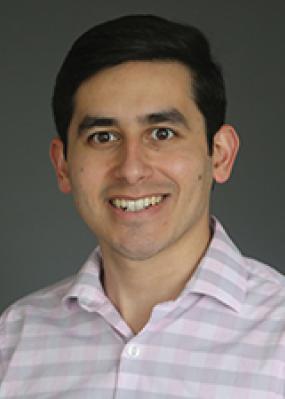
KU postdoc ensures research includes perspectives of students with disabilities

Bailey Allred | Postdoctoral Researcher | Kansas University Center on Disabilities
For Bailey Allred, questions about how to include students with disabilities in the classroom aren’t hypothetical.
“My older sister has disabilities, and so that’s oriented my worldview and the way I think about what I can bring to the world,” Allred said.
After earning a bachelor’s degree from Seattle Pacific University and a master’s degree from the University of Washington, Allred served as an elementary special education teacher. As the COVID-19 pandemic began changing education practices, Allred considered what systemic changes to schools could improve the lives of students with disabilities. She returned to UW for a doctorate, where her dissertation focused on the distinctions between inclusion and belonging — and understanding belonging through the stories and lived experiences of adults with disabilities.
“The work I did with my co-researchers highlighted that, even when they were included in spaces, they were still often feeling isolated, disconnected and judged,” Allred said. “That impacts academic outcomes. It impacts social, emotional and relational opportunities for students through K-12 and beyond.”
Allred is currently a postdoctoral researcher at the Kansas University Center on Disabilities, where she focuses on how to include the perspectives of those with disabilities in research and education practices. She helps craft and submit new research proposals, sets up projects as they begin, and assists with research that started before her arrival at KUCD.
One such project is educating emerging researchers with intellectual and developmental disabilities in skills needed to craft their own research questions and be part of research teams. Before Allred began her postdoc, KUCD created a 16-session course that met over four months. The emerging researchers received content knowledge about research skills and completed a research project together. At the start of her postdoc, Allred supported that effort by writing a grant to the National Institute on Disability, Independent Living & Rehabilitation Research to expand the work. Allred is supporting this newly funded project and also supports facilitation of KUCD’s Inclusive Research Network that meets virtually.
“With this new grant, we are seeking people interested in diving deep to help recruit, train and educate individuals with intellectual and developmental disabilities to hopefully join research teams,” Allred said.
Inclusion in educational settings benefits students with and without disabilities.
“When kids, especially from elementary school, are put in spaces where they see the diversity of needs and gifts, it helps them think creatively about the types of people they want to be friends with,” she said. “It helps them think creatively about their own gifts, how they might be a mentor to someone else, but also where they might be mentored and how a student with disabilities might teach them something new.”
What has united all of Allred’s career — both as an educator and now as a researcher — is challenging systems to take seriously the perspective of those with disabilities. Regardless of how her career may shift between the two settings, she’s intent on driving that mission forward.
“As an educator, I was asking a lot of questions like, ‘Why isn’t the student’s voice showing up in the annual meetings or in these evaluation settings?’” she said.
“I hope that whatever context I end up in, I can see a shift in that. How does the work that I’ve done help me to move that system toward a space that is open to hearing the lived experiences of people with disabilities and trusting that they are competent and able to be agents in their own lives?”