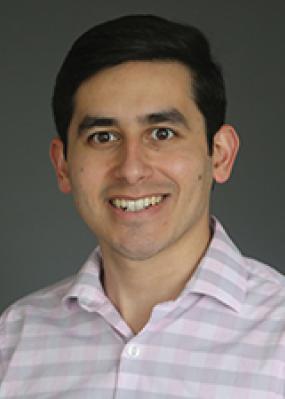
'I am striving to uncover how and why music contributes change in human lives'
University of Kansas faculty are striving to advance knowledge, interpret our world, solve problems, spark innovation, create beauty and catalyze imagination through their research, scholarship and creative activity. Through the “I Am Striving” series, we’ll learn more about what inspires KU researchers, as well as the goals and impact of their work.
Q&A with Deanna Hanson-Abromeit, professor of music therapy and Life Span Institute researcher
Explain your research as you would explain it to someone outside your field, such as your grandparents.
I'm a music therapist, and we all use music in our lives to help improve how we feel. But as a music therapist, what I'm trying to do is really look at the intersection between music, people and behavior change. I'm really interested in unpacking the music itself and what contributes to that change in terms of the features of music. I try to play around with the music and see what those subtle changes are and how they contribute to change in health outcomes for that person.
What does your research look like? What methods do you use?
Most of my research is based in intervention development. This can look a lot of different ways in terms of the methods that I use and the ways in which we're investigating a music-based intervention. There's a lot of work in terms of looking at the literature and doing systematic reviews to see what's already out there so that that can inform how can we contribute something that's different to what already exists and also understand what some of the gaps are in the current literature. We can fill some of those gaps, especially in the ways in which we are designing, implementing and reporting on music-based interventions. Most of my research is in intervention development and then studying it through implementation. In the implementation piece it looks really fun and engaging because we're actively creating music with the participants. And then afterward we code those different behaviors. I've also engaged in theory development for the intervention so that we have a solid understanding of what the health need is that we're addressing in the music context.
What inspires your research? Why are you passionate about this work?
The thing that really inspires me and the research that I do is really the clinical practice. I love being a music therapist. I'm very passionate about it. I'm fascinated by it, and I'm never bored by it. It is very complex. When we're working with people, they have complex needs. What really keeps me going is this curiosity and these questions about what music therapy is — trying to really differentiate a music therapy, music-based intervention from music medicine, where you are listening to a piece of music while you're getting a shot, for example. The questions that arise in my clinical work — and the things that I see in working with other practicing music therapists — inspire that research and help me understand the application of the research and how we can translate that into the practice.
How does your research directly impact your field, society, Kansas and the world?
I want my research to have a high level of integrity. It has sustainability. It's not just a publication, but that what we're researching is helping to define and understand more deeply the nuances of music therapy and the experiences that are happening in the context of the music, the therapist and the clients. For the discipline, I'm hopefully providing some tools that will create experiences that they can then take from research and put into their clinical practice and make that practice more effective. I also really want my research to translate into the classroom. When I am teaching undergraduates and graduate students and supervising them in clinical practice, I want the things that I'm learning in the research to have application in the teaching. The research also has an impact for society and Kansas. What I'm looking at are music-based interventions that are targeting a specific health need, whether that's with premature infants or in a recent study with people who have been diagnosed with COPD, chronic obstructive pulmonary disease. And so really looking at the impact of what we're doing and how does it improve lives.
What is a recent study/example of work you’d like to share?
In the last year, I have completed two pilot studies with two different interventions. We call the one we finished this summer the infant pre-linguistic singing study. We created a series of songs targeting infant pre-linguistic skills — so that idea that joint attention, gestures and early vocalizations transform into words and meaning. The other piece of that was also fostering greater opportunities in a different modality, through music for parents to interact and have these conversational turns with their infants, which is really important for language development. We had 14 families participate in this study with us this summer, and we've finished some early coding and are in the process of doing some data analysis.
What do you hope are some of the outcomes of your research and work?
I think there are three primary outcomes that I'm striving for. The first is I really hope that the people that participate in music-based interventions have their health outcomes change — that what we're doing is actually effective and contributes to improving their lives in a meaningful way. The second thing is that I hope my research will contribute to the scientific rigor of music-based interventions and allow us to more deeply understand what music is contributing to the change that is happening with the people that are involved. And then third I hope that my research also contributes to the training and clinical practice of music therapists and advances the discipline in a way that allows us to replicate interventions and understand that we are seeking outcomes and that we can get those consistently by offering well-defined interventions.
Tagline: I'm Deanna Hanson-Abromeit. I’m a music therapist and music-based intervention researcher. I am striving to uncover how and why music contributes change in human lives.