New core lab enhances physical sciences and engineering research at KU
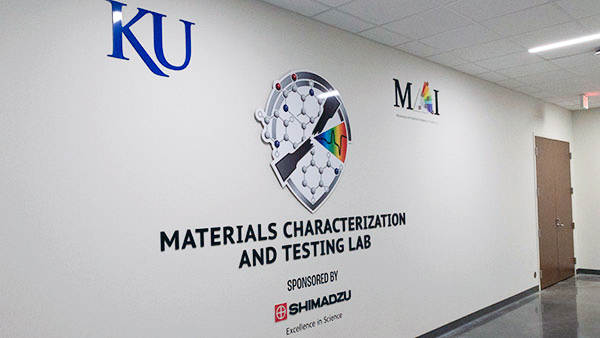
A new core lab at the University of Kansas will increase the capacity to research materials such as next-generation batteries, transportation infrastructure, nanotechnologies, drug delivery mechanisms and more.
The Materials Characterization & Testing Lab, located in Gray-Little Hall, opened its services to KU and regional researchers in May. The lab includes 11 new instruments from Japanese equipment maker Shimadzu, which allow scientists to evaluate a wide range of materials for characteristics ranging from their nanoscopic structures to their overall material properties.
“The goal of this laboratory is to support the research and teaching missions of KU with a multidisciplinary materials-based theme that cuts across different schools and campuses,” said Steven Soper, Foundation Distinguished Professor of Chemistry and Mechanical Engineering and director of the KU-based NIH Center of BioModular Multi-Scale Systems for Precision Medicine.
One of the new pieces of equipment is, a benchtop X-ray computed tomography system that works like a CT scanner, but for materials research. It enables scientists to see the internal structures of an object without destroying the object. Another is a micro-hardness tester, which lets researchers test material strength at extremely small scale — such as semiconductors, hard discs or surface treatments — by measuring indentation as the device presses against the specimen. These and other instruments in the lab could help engineers create next-generation computer technology or mechanisms for delivering drugs more efficiently to affected parts of the body. They also provide unique educational opportunities for KU students.
“There will be formal graduate and undergraduate classes based on the resources in this core laboratory, with a focus on materials in science and engineering,” Soper said. “For example, I teach a class focused on biomedical microdevices made from soft materials, such as polymers. This core laboratory will help students understand the properties of polymers for injection molding.”
KU secured the lab’s equipment from Shimadzu as part of the Shimadzu Partnership with Academic Research & Quality of Life program, which aims to build long-term ties with academic institutions in North America. This partnership includes ongoing training for KU students, faculty and staff provided by the company on how best to use their equipment to assist with difficult measurements and data interpretation. In addition, KU and Shimadzu will offer joint workshops on a regular basis to educate researchers on testing material properties.

Beyond enabling innovative research and unlocking training opportunities for students, the equipment in this new lab keeps KU competitive with peer academic institutions. State-of-the-art labs help universities recruit and retain high-profile faculty and secure highly competitive research grants from the federal government.
“For example, KU just submitted a large grant proposal with University of Nebraska to the National Science Foundation as part of their Nanotechnology & Quantum Material National Infrastructure program. The MCTL was a major centerpiece for that application,” Soper said.
Regional industry researchers can also benefit from the lab. The MCTL and other KU core labs typically offer a fee-for-service model that lets private sector scientists use this equipment and reimburse the university for related costs. Noraida Martinez-Rivera serves as the director for both MCTL and the Microscopy & Analytical Imaging lab. She can arrange consultation on potential projects and train researchers to use the equipment as part of their regular research activities.