#KUFieldWorks: Collecting specimens for future scientists
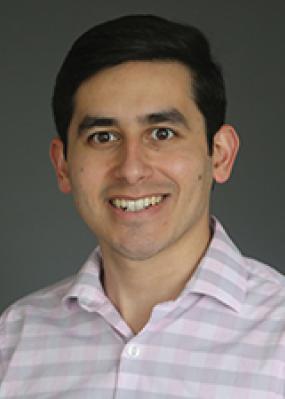
Q&A with Alexander Hey, doctoral student in ecology & evolutionary biology
The way scientists collect and preserve specimens today shapes what researchers will be able to discover in the future. Alexander Hey, a doctoral student in ecology & evolutionary biology and researcher at the KU Biodiversity Institute & Natural History Museum, uses holistic specimen collection to preserve a more complete record of organisms and their evolution. His work could support future research and help inform wildlife management and conservation.

What methods, approaches, experiments, etc. are you using?
Much of the fieldwork at a natural history museum involves going out and collecting specimens to be used not only in an investigation you may be planning as a scientist, but also preserving that specimen for future questions. As a result, most of the fieldwork in the mammalogy division at KU’s Natural History Museum is centered around holistic specimen collection. This is the process of collecting the organism and all its associated parts. Whether tissues stored in liquid nitrogen for genetic investigations, endoparasites for coevolutionary studies, or fungal swabs for pathogen surveillance, our fieldwork methods attempt to preserve and record as much data as possible to maximize further scientific inquiries.
We can often emphasize certain preservation methods based on the goals of the expedition, which is another benefit of holistic collection process. For example, when we were instructing the Museums & Emerging Pathogens in the Americas (MEPA) Fieldwork + Genomics workshop in Guatemala, we knew we would be sequencing many of the animals caught just days after capture to teach some of the molecular methods we use at KU. In this case, we preserved tissue in a medium that does not need to be frozen and will help with DNA extraction.

Why does your study matter to your field or for society?
My work focuses primarily on population genomics, or how the genetic signatures of populations change over geographic and/or taxonomic space. My goal is to use the skills I gain at KU — whether it be how to collect/prepare/archive specimens to how to run a molecular lab — to expand DNA sequencing capacity and inform wildlife management. Through this integration of holistic fieldwork and advanced molecular techniques, the Biodiversity Institute plays a huge role in both expanding our knowledge of life on Earth and pushing the boundaries of biological research.
What do you enjoy most about being in the field?
This is a tough one, but I’d have to say it’s all the amazing places I get to stay. I like getting to a new field site and exploring the area, especially after a long commute out to a remote site. It is usually a combination of excitement for what is to come and relief that we made it to the site, as field logistics can always throw in unforeseen challenges.

What are some memorable (funny, scary, surprising, etc.) moments from the field?
There are almost too many to count, but a funny one took place during my first summer as a graduate student at KU when we went on an expedition to Northern British Columbia (BC). We had driven from Lawrence (40+ hours) all the way up to the remote, wet forests of BC. I was new to graduate work, so I had just bought some untested field gear to deal with the rain up there. Within an hour or so of arriving, we were out setting our first trap line, and the rain pants I had bought ripped as I stepped over a
log. I also learned that evening that the rain jacket I had bought could not handle
intense downpours, and I had mistakenly put my tent in a drainage puddle instead of
what I thought was a soft bed of needles.
Suffice to say, I was perpetually wet for the next week or so, as it was hard to dry anything in a forest that rains on most days. As the trip progressed, my pants acquired a new rip/hole every day, which was subsequently patched with duct tape. By the time I realized how poor my rain pants purchase had been, my pants could stand by themselves from the extra support from the tape. We often laugh when remembering how unlucky that first trap line was, and my graduate student peers get a big kick out of the photos of what was referred to as “Alex’s super suit.”
When is fieldwork frustrating, challenging or overwhelming?
I’d say the most challenging part about our fieldwork is being comfortable with adjusting when things don’t go as planned. Sleep is precious in the field, especially when you stay up all night catching bats and need to check rodent traps at dawn. Usually, I can fight a lack of sleep through pure excitement of being outdoors, but in the Philippines I got pretty frustrated one night when returning to my tent. Through no other fault than my own, I had left my tent ajar in the morning and the bugs had taken advantage of the opportunity. The night prior, my pillow and sleeping pad had popped from the sharp end of a banana branch puncturing a hole under my tent. An impromptu war with roaches, ants, spiders and mosquitoes was not what I had hoped for that night.
It can be easy to get overwhelmed in a situation like that, as I wasn’t happy with how I could have easily prevented an assault on my coveted stash of protein bars. But with so much fieldwork experience that the BI provides, you learn to understand it’s all part of the process and sometimes all you can do is deal with it at the time. All said and done, I still look back fondly on that trip and would easily go back to the Philippines. But I think I’m going to be triple-checking my tent door for the rest of my life. Lesson learned!

How does fieldwork complement the work you do elsewhere?
Fieldwork makes me grateful for those involved in collections and natural history museums. To see the amount of care and effort that goes into each specimen, from preservation to archiving, is always impressive. Oftentimes as researchers we only see the end product of an expedition, like a digitized inventory of specimens on a public database. Going out and participating in the process of collecting makes me appreciate the value of the samples in my own dissertation work and will influence the decisions I make in my research career.
First photo: University of Kansas researchers conduct fieldwork in prairies, rivers, streams and mountains. The #KUFieldWorks series follows researchers on their fieldwork adventures.
Second photo: Alexander Hey at a sampling site in Otongachi Field Station, Ecuador.
Third photo: A guide on a canoe in the Bicol region of the Philippines.
Fourth photo: Alexander Hey with duct tape wrapped around rain pants.